Be yourself; Everyone else is already taken.
— Oscar Wilde.
This is the first post on my new blog. I’m just getting this new blog going, so stay tuned for more. Subscribe below to get notified when I post new updates.
Be yourself; Everyone else is already taken.
— Oscar Wilde.
This is the first post on my new blog. I’m just getting this new blog going, so stay tuned for more. Subscribe below to get notified when I post new updates.
The American President has appreciated India while addressing a mass gathering in the world’s largest cricket stadium in Ahmedabad on 24th of Feb. President Trump and PM Modi addressed the huge rally of 1 lakh 10 thousand people there. The 45th President of the U.S. has come to India for his first ever diplomatic visit. He is accompanied by a high level delegation including the First lady Melania Trump, the president’s daughter and adviser Ivanka Trump, son-in-law and advisor Jared Khushner and a team of top American officials. A grand public reception was held for Trump at Motera Stadium, termed as ‘Namaste Trump’.
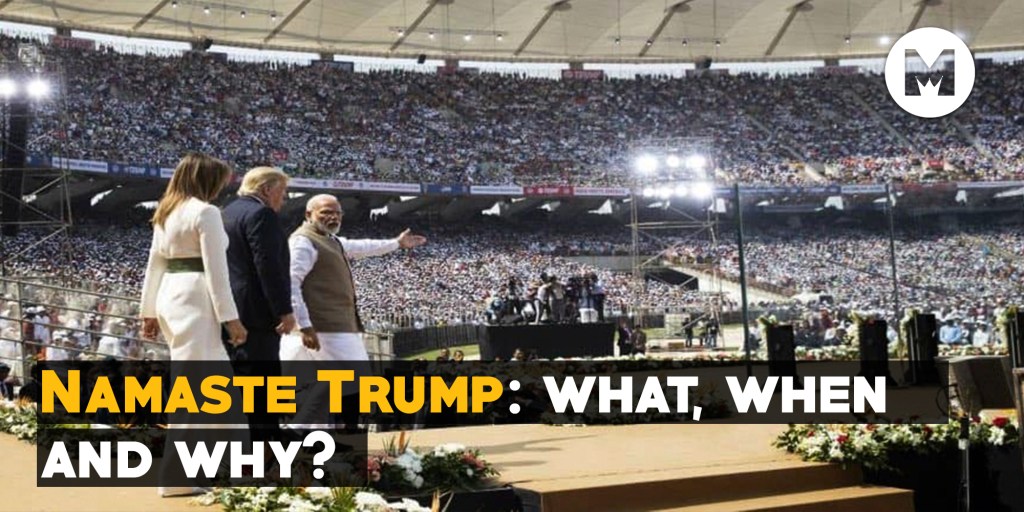
A similar event was organised in America for PM Modi in Texas when he visited America in September 2019 in which around 50,000 Indian-American took part.
Who organised ‘Namaste Trump’?
The organisers were not the Gujarat government,but a private newly formed group called the ‘Donald Trump Nagrik Abhinandan Samiti’ (DTNAS) which just emerged 4 days prior to the scheduled date of the american president’s visit. It is approximated that the cost for the 3 hour long event is going to be around 120 crore rupees.
Also Read:- Deportation of British parliamentarian: Modi government not ready of accomodating criticism?
After landing in Ahmedabad, the PM escorted the President and the First lady to ‘Hriday Kunj’ at Sabarmati Ashram of Mahatma Gandhi where the Trumps also spun the yarn before making an entry in the guestbook. Several gifts, including Mahatma mGandhi ji’s biography, a charkha, and a marble statue of three monkeys symbolising ‘ See no evil, Speak no evil and Hear no evil’ were presented to Trump at the Sabarmati Ashram.
It’s the first time that an American president visited the Sabarmati Ashram.
But Trump didn’t mention any word about Mahatma Gandhi ji in the visitor’s book, he just thanked PM Modi for escorting him to Sabarmati Ashram.
Also Read:- The Supreme court orders for permanent commission to women
After the Sabarmati Ashram visit, POTUS was led past a “road show” of stages representing the 28 states of India on his way to the Motera stadium.
There’s a controversy also going around this road show. The government a build a 5 feet high wall along the road that leads to the Motera stadium so that the slums along the road can’t be seen by the foreign dignitaries.
What Trump says in his speech.
Trump signifies the friendship between India and America and said that America will always be India’s faithful friend. He said, “India holds a special place in our hearts. India gives hope to humanity.” he also praises PM Modi and his journey of becoming the PM.
He also praises the journey of India in the past 70 years and said that India has become the largest democracy and has become one of the greatest nations in the world.
He praised the many development works done in India. He said that now India’s each village has access to electricity. Over 300 million people in India have got internet connection. India will soon become the home to the largest middle class. He praised India’s achievement in the space world, praises ISRO, especially for the Chandrayan 2 mission.
Trump also tried to acknowledge the soft power between the two nations. He praises the contribution of Bollywood in the entertainment world and has also said the words of ‘Sholay’ and ‘Dilwale Dulhaniya Le Jayenge’. He also said good words for indian cricket players, Sachin and Kohli.
On Terrorism
He said that the two nations are commited to fight terrorism and its ideology from the world.
He said that the U.S. is determined to help protect India from the threat of ‘radical Islamic terrorism’.But he also appreciated the role of Pakistan in fighting against the terrorism. He said, ‘Our government is working with Pakistan to crack down on terror groups. Our relationship with Pakistan is very good.
Also Read:- Kejriwal 3.0 : Challenges of the Delhi government
The American President didn’t criticize Pakistan because Donald Trump want to withdraw the U.S. troops from Afghanistan, who were fighting with the Taliban forces since 2001. Pakistan is a crucial player in the mediation talks between the Taliban and the American Government. Without Pakistan, it would be difficult for America to withdrew its forces from Afghanistan.
What about Trade deal?
Last year the US has revoked the status of GSP given to india, under which many of the indian commodities were exempted from excise
duty in U.S., and the indian products were able to compete in the American Markets. But after the revocation of GSP status, Indian companies struggles a lot to establish its presence in the American market.
India is hopeful of a significant trade deal on Tuesday.
Regarding the trade deal, Trump said, “USA and India will be making a very big trade deal to boost our countries economy. I am sure that we can reach a good trade. But PM Modi is a tough negotiator.” Trump also lashed out at trade barriers imposed by India.
But there will be a major defence dealon tuesday. india will buy anti-tank helicopter from America.
Effect of huge reception event like this
The Presidential elections are in November in U.S. The Indian American population in the U.S., totalling about 4 million, has increased by 40 % between 2010 and 2017. Thus, making them the fastest growing immigrant group in the country. It is also considered that Trump is attending this kind of huge event organised by India to influence the Indian American population as the Indian Americans now play a deciding role in the U.S. presidential elections.
This could also affect India-America relation in adverse manner in the future if the Democrats win the Presidential election in November because they can consider it as a step to influence the Indian-Americans to vote for Trump. Last year in september also, PM Modi interacted with Indian-Americans in ‘Howdy Modi’ event in Houston and said, “Abki bar, Trump sarkar” which was similar to the election campaign slogan of Narendra Modi during the 2014 Prime Minestrial elections, “Abki bar, Modi sarkar“.
source https://www.molitics.in/article/652/namaste-trump-in-india
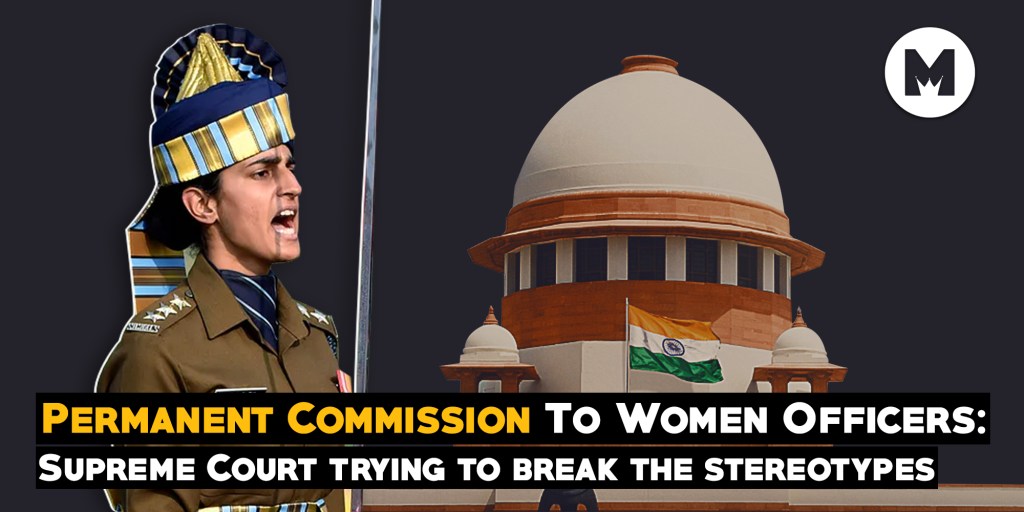
Supreme court has delivered a judgement, upholding the 2013 verdict of the Delhi High Court, on Feb 17, 2020, asking the government to grant permanent commission to women in the Short Service Commission. SC asked to pass the notification regarding it in the time period of 3 months.
The women cadets are already being absorbed in the various branches of the armed forces, but they are denied the permanent commission. This was a clear violation of the equality and non-discrimination principle enshrined in the constitution of India. The supreme court has destroyed the stereotypes about the physiological features as represented by the government in its submission in the court which deny equal status to women who complete the same criteria as their male counterparts do.
The Supreme Court observed that, as long as there is thebelief in the society that women are physically and psychologically weaker than their male counterparts, there will not be the change of mindsets. infact , the Supreme Court has turned the many contradictions that were embedded in the government’s arguments that weaken the case of the government. The inherent prejudices in the government’s submission were exposed by the Supreme court.
The government submitted that women officers are not advised to be deployed in the battle zone because they are not that strong and could prove as a liability rather than an asset.
The government submitted that the women officers can’t live in those areas as there are ‘ minimal facilities for habitat and sanitation’.
The government, although, accepted in the court that around 30% of the total women officers are deputed in the conflicted regions of the country. By telling this, the government has weakened its own argument that the women officers are not suitable to be deputed in the harsh terrain and conflicted zone areas.
Also Read :-Kejriwal 3.0 : Challenges of the Delhi government
The supreme court, by ordering the government to provide for the Permanent commission for women in the 10 branches of the SSC, has ensured a level playing field. The Supreme Court has also acknowledged the valiant roles played by women officers in the battle fields and in other conflicted situations, for the security of the nation.
Given the fact, that the Indian Army experiences a shortfall of officers by about 10,000 in the officer ranks, this discrimination happening with the ewomen officers in not allowing them for permanent commission is more annoying. It’s not that there is a surplus of women officers in the Indian Army. There are only 1653 women officers out of a total of 40,825 officers.
The Supreme court has recommended the government to correct the flaws in the matter of pensions due to women.
Also Read:- Samvidhan: The oxford ‘Hindi word of year 2019
Though the Prime Minister announced, that permanent commission would be given to the serving women officers in the armed forces, on August 15, 2018 from the ramparts of Red Fort.
It is a telling state of affairs that after its announcement by the Prime Minister, it needed the Supreme Court to push the government into doing it.
The efforts of the litigants who filed the petition in 2003 in the High Court which gave the same judgement of giving permanent commission to women. But the government didn’t implement it and the litigants had to move to the Supreme court for their rights. The supreme court also upheld the high court judgement. The efforts of those litigants are plausible.
Now it’s up to the government, whether it would be able to implement the order given by the supreme court in the given 3 months period or not, given the inherent flaws in the executive structure.
Also Read :-Is everything really normal in Jammu and Kashmir?
source link https://www.molitics.in/article/650/SC-orders-for-permanent-commission-for-women
The Indian government has released a statement regarding the arrest and deportation of the British Labour parliamentarian Debbie Abrahams, clarifying that her e- business visa had been revoked 3 days and she was trying to enter India through an invalid visa.
Debbie Abrahams said that she had got the e- visa for a time period of 1 year in october 2019. She questions how it can be possible that her visa got invalid if its term period is not over. It is clear that the government has revoked her e-visa because she was a critic of the Indian government as the government has curbed human rights in Kashmir after the revocation of Article 370 from kashmir.
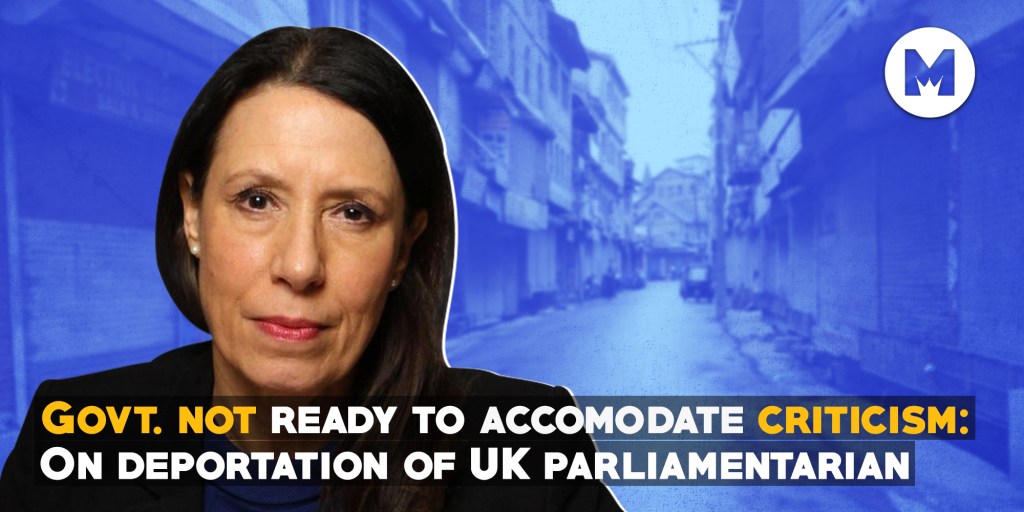
After the revocation of article 370 in August 2019, Mrs. Debbie Abrahams, who is the chairperson of the United Kingdom’s All- party parliamentary group on kashmir, raised the issue of human rights curbation in kashmir by the Indian government, in the british parliament. It can be harmful to Indian interests that a country can revoke a Visa issued for 12 months in just 4 months. The whole incident was nothing short of maladroit.
However, it is in the governments limit that it can revoke the Visa of any suspected person. But if the intention of the government was to prevent public criticism of its actions in Jammu and Kashmir, then its treatment of the British MP has ended up having spotlighted its action.
Similar comments can aslo be made in the case of the American Congresswoman, Mrs. Parmila Jaypal, who was a proponent of the resolution brouht in the house critical of India’s behaviour on Jammu and Kashmir. Mr. S. Jaishankar, Indian minister of external affairs, when went to America in December, denied to meet Ms. Parmilla Jaypal. He must have engaged with her at the meeting with the influential House Foreign Affairs Committee and tell her about the efforts done by the indian government to maintain peace and normalcy in Kashmir after the revocation of article 370.
Government is hopefully thinking about the fact that both these parliamentarians are from the opposition parties of the UK and USA, and ignoring their concern will not impact India’s relation with the Boris Johnson government and Trump government.
However, for the government like those of Malaysia and Turkey which are openly criticising Indian government on various international platforms, the Indian government is equally sharp.
India has imposed trade restriction on the palm oil imports from Malaysia. India has also issued a travel advisory to its citizens travelling to Turkey and has also told about its objection to the Turkish ambassador regarding Turkey’s comments in India’s internal affairs.
But, the anger expressed by the Indian Government on the negative comments by the Malasiyan and Turkey’s executive head on India’s internal matters doesn’t seem very much valid when at the same time organising groups of envoys to visit Kashmir and encouraging them to express positive opinion on the situation of Jammu and Kashmir.
It all shows that the government is not ready for criticism and is trying to suppress dissent, be it at international level or from the people of this country. The deportation of politicians who are critical of the Indian government, seems to be a part of a whimsical behaviour not suited to a democracy which takes pride in its tradition of debate and openness.
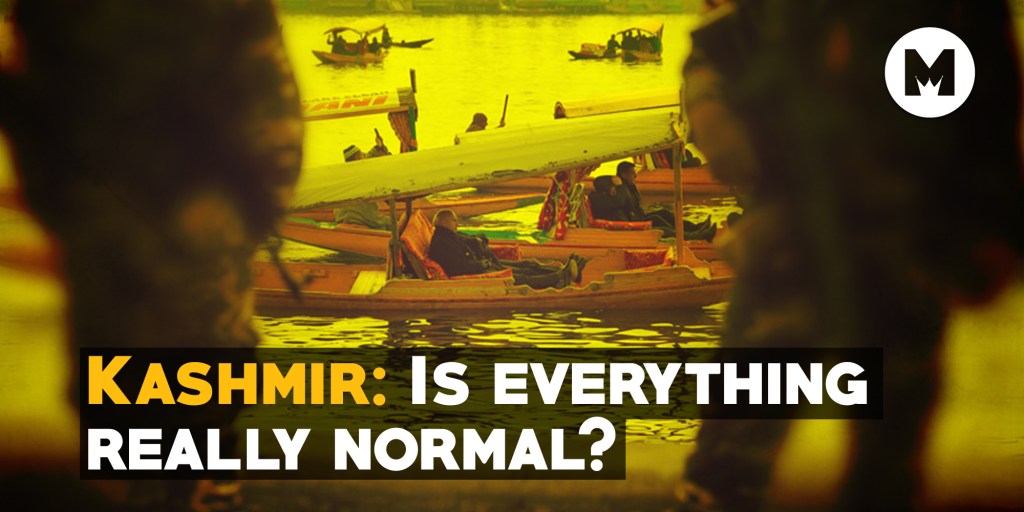
The Home Minister assured the Rajya Sabha, 3 months before, that “normalcy” had been restored in Jammu and Kashmir. Yet, 3 main leaders of the Jammu and Kashmir- Omar Abdullah, Farookh Abdullah and Mehbooba Mufti have been slapped with the Public Safety Act and are under detention for more than 200 days.
Farookh Abdullah, under the Vajpayee’s government, defended India’s position on Kashmir to the world, as Minister of State for External Affairs. Now, according to the PSA slapped by the Jammu and Kashmir administration, he stands accused of mobilising the people of Kashmir to defy militants backed by Pak and come out to vote in elections. Just like Mr. Abdullah, Mehbooba Mufti has also been deemed “anti-national”. She ran Jammu and Kashmir as Chief Minister with her party in alliance with the BJP for three years.
Broadening the zone of normalcy
It used to be the Indian government’s primary goal to show the world that the people of Kashmir participated in elections. The government tries its best to obtain diplomatic certification for outcome in elections as a measure of the genuineness of the exercise. An election in J&K is not going to happen soon, but proving that such an election is genuine, when it is held, will still be the ultimate goal of this government. The steady escorting of foreign delegates into the new Union Territory is an indication of this. The plank of “normalcy” in J&K extends with every lot of foreign envoys that enter the territory. The question then is, when will an election take place if the situation is “normal”?
In Kashmir, colleges and schools were open after the abrogation of Article 370, but nobody attended them. Is that also normal? Many of the established businesses,which were contributing in employment generation and boosting the economy, have been closed down due to the internet shutdown in the valley as they were dependent on internet connection.
Every now and then, U.S. President Donald Trump makes a comment that he is ready to mediate between India and Pakistan, even though New Delhi insists that Kashmir is an internal matter. Earlier, the U.S. used to make such comments in the times when India and America were not having good relations, but it has become a routine for President Trump to offer for mediation, even in times when PM modi gets a grand welcome in the ‘Howdy Modi’ event in Houston and India is all set to organize ‘Kem Cho Trump’ in Gujarat. Is this too the new normal?
The misconception formed
The government conducts focused, narrowly guided tours in batches for foreign diplomats to make a broad certification of the normalcy that prevails in Jammu and Kashmir to their home countries. The diplomatic envoys see and hear exactly what New Delhi wants them to see and hear. These diplomats go to Srinagar and no doubt send optimistic, impressionistic messages to their countries.
On the other hand, Indian politicians are not allowed to go to Kashmir and determine the condition. They probably have to request the foreign missions to put out regular updates, in the form of newsletters or health bulletins, to get a better sense of the situation.
Challenges ahead and the way forward
The main challenge for the government now is to hold elections in the newly created union territory and for that, the delimitation hurdle first needs to be crossed. This will be done on the basis of the 2011 Census.
The active participation of people in the elections is also a challenge for the government and the election commission as even the panchayat polls, which the Prime Minister declared a resounding success, left half of the seats empty because of the boycott calls. For that, there should not be a sense of anger, hurt and betrayal in the valley. The slapping of PSA on PDP and NC leader has also ignited this.
Leaders like Omar Abdullah, Farookh Abdullah and Mehbooba Mufti should be freed from the draconian PSA and should be taken into confidence. They could be a great asset in quick stabilization in the valley. Placing senior leaders under detention exclude them from the opportunity of maintaining the normalcy pitch.
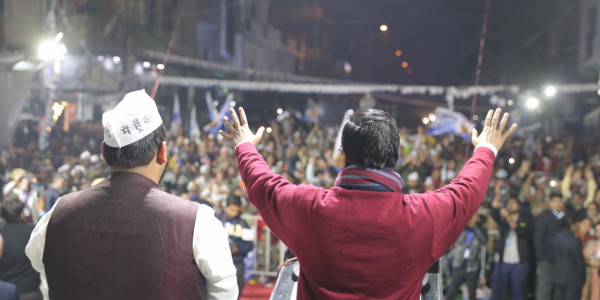
क्या जय श्री राम की जगह जय बजरंगबली सांप्रदायिक राजनीति को ही मजबूत करता है?
क्या CAA और शाहीन बाग पर मौन बहुसंख्यक तुष्टिकरण का ही एक उदाहरण नहीं है?
क्या डूब जाने के डर से धारा के साथ प्रवाह धारा को मौन सहमति नहीं है?
दिल्ली चुनाव के परिणामों ने विमर्श के एक बड़े मैदान का निर्माण किया है। उपरोक्त सवालों को सही जगह और जवाब भारत की राजनीति का भविष्य तय करेगी।
दिल्ली विधानसभा चुनावों के परिणामों पर पूरे देश की नज़र थी। बीजेपी के कई सांसदों, बीजेपी या इसके समर्थित राज्य सरकारों के मुख्यमंत्रियों, गृहमंत्री और प्रधानमंत्री के आक्रामक प्रचार ने इन चुनावों का कौतूहल बढ़ा दिया था।
CAA के ख़िलाफ़ आंदोलन और उसके बाद केंद्र सरकार द्वारा उसे हिंदू-मुस्लिम बहस में बदल देने की कवायद ने इन चुनावों को बिल्कुल अलग रंग दे दिया।
लेकिन केजरीवाल ने एक-एक कदम फूंक कर रखा। CAA आंदोलनों पर मौन साधे रहे। पूछे जाने पर नेश्नल टेलीविजन पर हनुमान चालीसा गाने से परहेज़ नहीं किया। महसूस किया कि लोगों के सिर पर कौन सा नशा आसानी से चढ़ता है, और वह नशा बांटने लगे। मीडिया को उसी तरह प्रबंधित किया जैसा मोदी और बीजेपी अमूमन करती है।
इनके अलावा पानी, बिजली की सस्ती/मुफ़्त उपलब्धता और शिक्षा एवं स्वास्थ्य क्षेत्रों में किया गया काम केजरीवाल के पक्ष में माहौल तैयार कर चुके थे।
बेशक, दिल्ली में केजरीवाल सरकार ने कल्याणकारी राज्य की अवधारणा को साकार करने की कोशिश की है। लेकिन वैकल्पिक राजनीति का मतलब केवल यही नहीं।
सामाजिक ढ़ांचे को लेकर आपकी सोच, अल्पसंख्यकों के लिए आपकी विचारधारा और फ़ासीवादी ताक़तों के ख़िलाफ़ लड़ने का आपका रवैया आपकी राजनैतिक विचारधारा को रेखांकित करेगी।
अब, जब पार्टी चुनावों की अग्निपरीक्षा को पार कर चुकी है तो ज़रूरी है कि वह आत्मावलोकन करे-
– क्या ये महज़ दिल्ली की पार्टी है?
– क्या केंद्र में मोदी, दिल्ली में केजरीवाल इस पार्टी की सच्ची आवाज़ है?
– क्या जामिया के स्टूडेंट्स पर पुलिस बर्बरता के ख़िलाफ़ खड़ा न होना पार्टी का वास्तविक स्वभाव है?
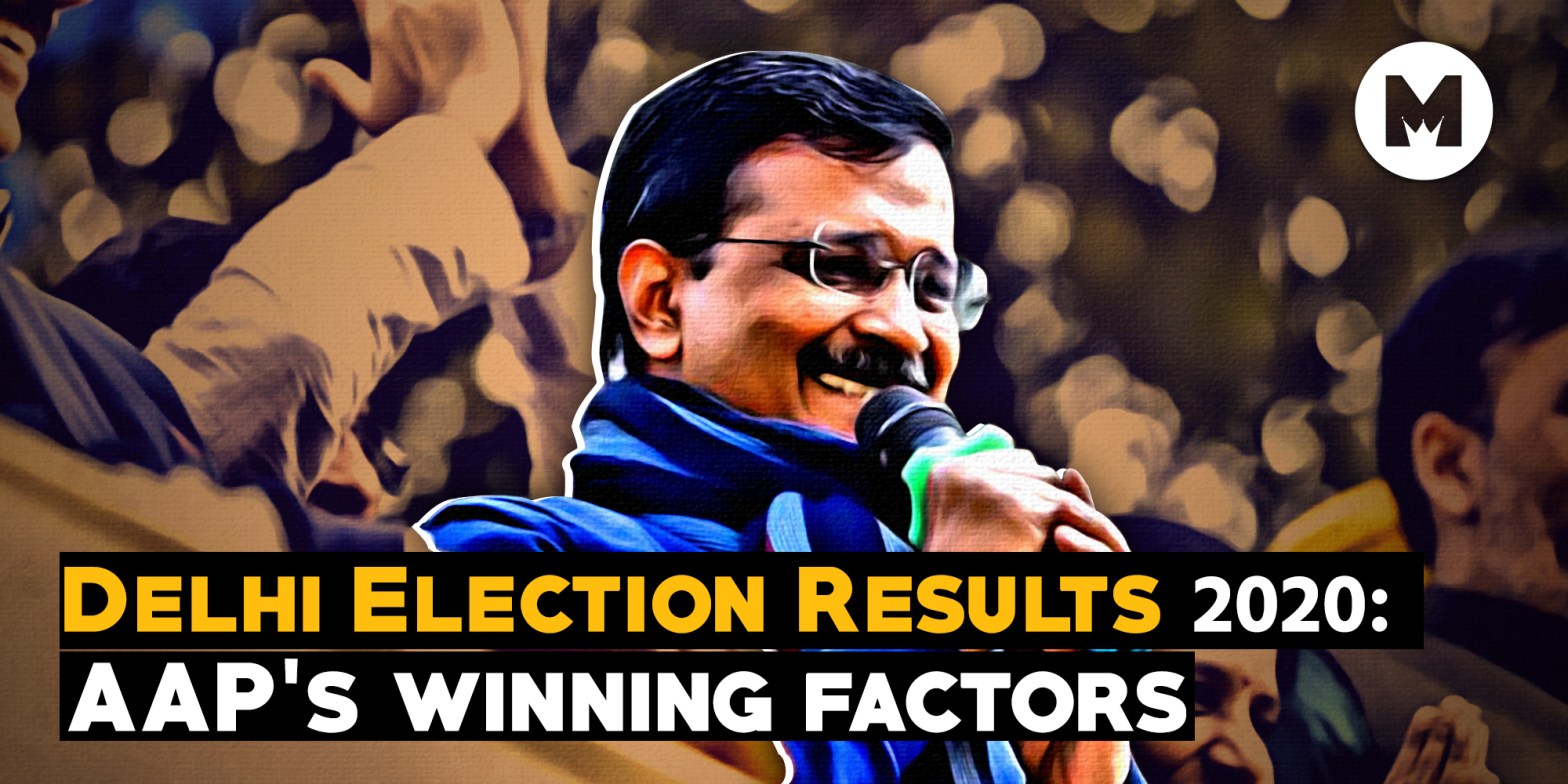
Arvind Kejriwal and his Aam Aadmi Party (AAP) were voted back to power with a massive mandate in the Delhi Assembly election 2020 as the party won 62 seats in the 70-member House. The party dropped just five seats and less than a percentage point in vote share from its historic 2015 performance.
Despite a bitter campaign that saw big shots, including Prime Minister Narendra Modi and Union Home Minister Amit Shah, the BJP managed to win only eight seats, only a 5 more from its 2015 tally. The INC, again failed to open its account — the party’s candidates forfeit their deposits on 63 of the 66 seats contested.The AAP secured 53.57 % of the vote share, while the BJP got 38.5% and the Congress 4.3%.
The loss in Delhi is a setback for Home Minister Amit Shah, who made it his mission to ensure that Mr. Kejriwal was denied a third term in office. BJP tried its best to defame Arvind Kejriwal but Arvind Kejriwal stressed his campaign mainly on the achievements of his government and that did the trick for the AAP.
BJP sources, however, blamed the party’s strategy of not projecting a chief ministerial face against Mr. Kejriwal, not being able to counter the AAP’s power and water subsidy schemes. The “unwarranted comments” against Mr. Kejriwal by senior party leaders like Pravesh Verma and Minister of State for Finance Anurag Thakur, who was among the 200-plus party MPs covering the Capital as part of the BJP’s campaign, is also seen as a reason that backfired. Anurag Thakur and Pravesh Verma were also banned from campaigning for 72 hours for raising derogatory slogan.
Mr. Shah also repeatedly said Delhi’s voters should press the “lotus” button on the electronic voting machine so that the “current” was felt in Shaheen Bagh, where thousands of people are peacefully protesting against the CAA-NRC-NPR regime. Mr. Shah personally addressed 52 public meetings in Delhi and Prime Minister Narendra Modi spoke at three public meetings, including one on Ramlila grounds.
For the BJP, the defeat in Delhi comes close on the heels of the loss in Jharkhand, where again the party stressed on CAA-NRC and Ram mandir. In Delhi too, Mr. Shah promised at several public meetings that a Ram temple would be constructed in Ayodhya in four months. It’s evident that what worked for the BJP in the Lok Sabha election did not work for it in Delhi or Jharkhand. The voter, clearly, has different interests and objectives in national and Assembly elections.
The derogatory performance of INC in the Delhi election was also a factor for this major defeat of BJP. A three-cornered contest in Delhi could have helped the BJP, but the Congress did a massive favour to the AAP by not campaigning. Like in 2015, the Congress voter turned out in large numbers for the AAP while the party came second in the 2019 Lok Sabha poll under the leadership of sheila dixit, when the party did active campaign, pushing the AAP to third position.
Mr. Kejriwal only spoke of his work and was going to the people on the basis of his government’s performance. He was critical of Mr. Shah on Delhi’s deteriorating law and order situation but did not directly criticise Prime Minister Narendra Modi.
Finally, Mr. Kejriwal emerged out as an effective opposition to the BJP. The reason for AAP’s victory for a third consecutive time is that the party has developed an alternative politics that centrestaged people’s everyday concerns, their hopes and expectations about livelihood and life.
This is an example post, originally published as part of Blogging University. Enroll in one of our ten programs, and start your blog right.
You’re going to publish a post today. Don’t worry about how your blog looks. Don’t worry if you haven’t given it a name yet, or you’re feeling overwhelmed. Just click the “New Post” button, and tell us why you’re here.
Why do this?
The post can be short or long, a personal intro to your life or a bloggy mission statement, a manifesto for the future or a simple outline of your the types of things you hope to publish.
To help you get started, here are a few questions:
You’re not locked into any of this; one of the wonderful things about blogs is how they constantly evolve as we learn, grow, and interact with one another — but it’s good to know where and why you started, and articulating your goals may just give you a few other post ideas.
Can’t think how to get started? Just write the first thing that pops into your head. Anne Lamott, author of a book on writing we love, says that you need to give yourself permission to write a “crappy first draft”. Anne makes a great point — just start writing, and worry about editing it later.
When you’re ready to publish, give your post three to five tags that describe your blog’s focus — writing, photography, fiction, parenting, food, cars, movies, sports, whatever. These tags will help others who care about your topics find you in the Reader. Make sure one of the tags is “zerotohero,” so other new bloggers can find you, too.
Have a WordPress.com account? Log in now.

